
Your needs, this model
Does it fit your priorities?
Would you rather aim the outlet by hand than require a powered sweep?
The directly linked guide documents a head that pivots manually through 47 degrees for multi-directional airflow. It does not document powered oscillation.
Explore this need in the finder →Are two heat levels and a separate thermostat enough, without a fan-only mode?
The guide shows Low Heat and High Heat, plus a separate adjustable thermostat dial. It does not document a separate fan-only mode or wattage for either heat setting.
Explore this need in the finder →Do you need a delayed start or an automatic shutoff countdown?
The exact guide documents neither a user timer nor delayed start and warns against an external timer. A thermostat is not a timed start or shutoff.
Explore this need in the finder →Can you use an indoor floor heater on a stable surface with the manual’s clearance and outlet rules?
The VHEAT guide requires upright floor use, at least three feet of clearance on all sides, a direct grounded wall outlet, dry indoor conditions and attended/supervised use; it expressly excludes bathrooms and damp areas.
Explore this need in the finder →Vornado’s VHEAT is the choice here for someone who values a metal, retro-inspired heater and wants straightforward controls rather than a digital feature list. Its useful distinction is not an app or a bank of modes: the manufacturer documents two heat settings, a separate adjustable thermostat, and a head that can be tilted by hand. That simple approach works only when the heater’s strict floor-placement and clearance rules fit your room.
What its controls actually do
The VHEAT has a toggle for Low Heat or High Heat and a separate thermostat dial. Vornado’s guide explains setting the thermostat high, then slowly backing it down until the heat cycles off at the desired comfort level. That is a mechanical approach, not a published digital temperature target: the guide does not give a Fahrenheit range, and it does not state the wattage of either heat setting. If a firm power cap or a specific set temperature matters, the documentation available for this exact listing does not let you verify it.
There is no documented fan-only setting. The guide shows only the two heat positions and says the heater moves a substantial amount of air during use. Do not treat its air movement as a cool-air mode. Likewise, a thermostat is not a countdown timer: the exact guide documents no auto-off countdown or delayed start, and it warns against using an external timer that automatically turns the appliance on or off.
Aim it by hand, not by motor
The pivoting head tilts 47 degrees for multi-directional airflow. This is useful if you want to set an angle toward the occupied side of a room, then leave it there; it is not powered side-to-side oscillation. You have to reposition the head yourself rather than expect a moving sweep. Vornado describes whole-room vortex circulation, but the reviewed page and guide do not publish an independently measured room-size result or a temperature-uniformity test. Treat “whole room” as the maker’s design description, not a guarantee that one heater will cover every floor plan or replace central heat.
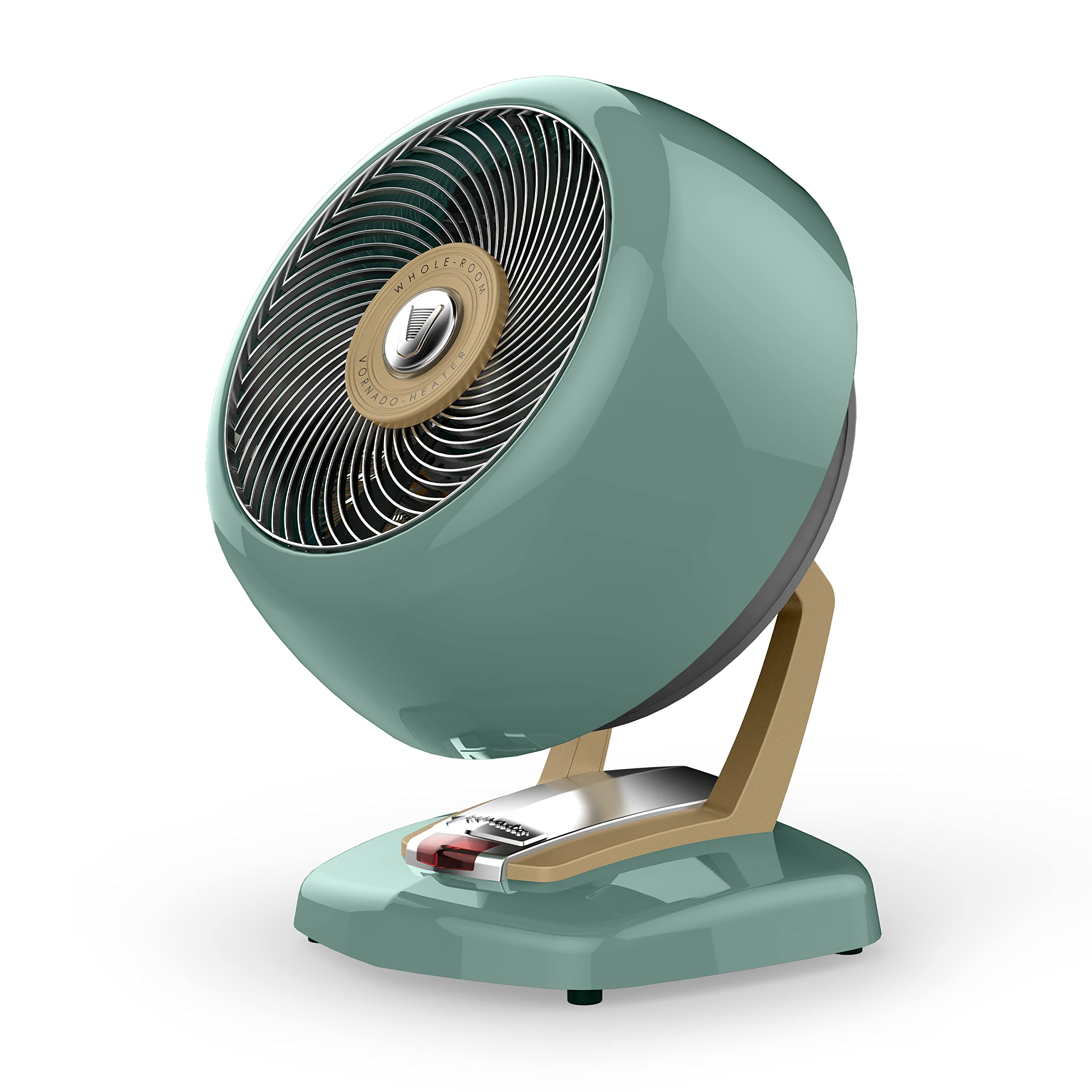
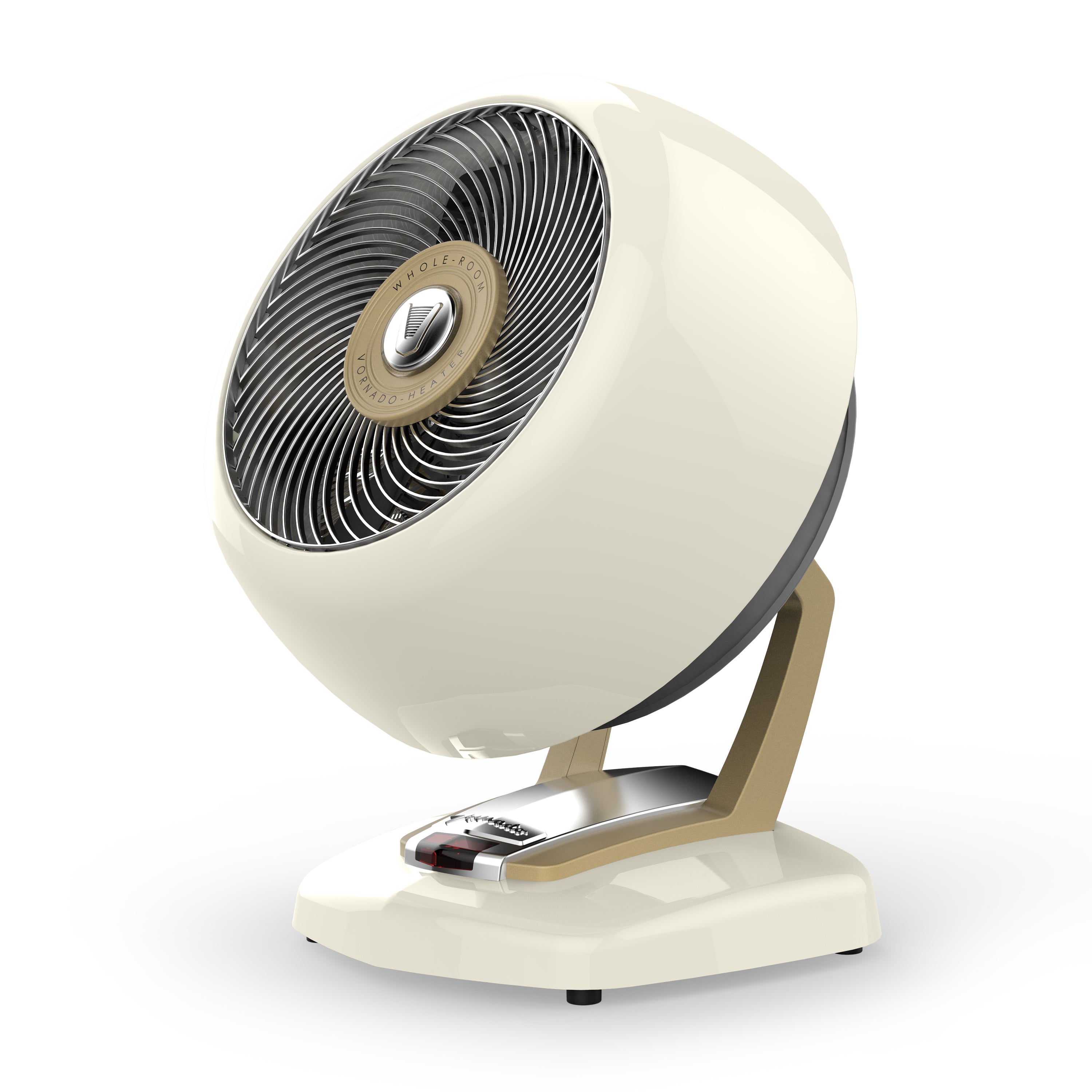
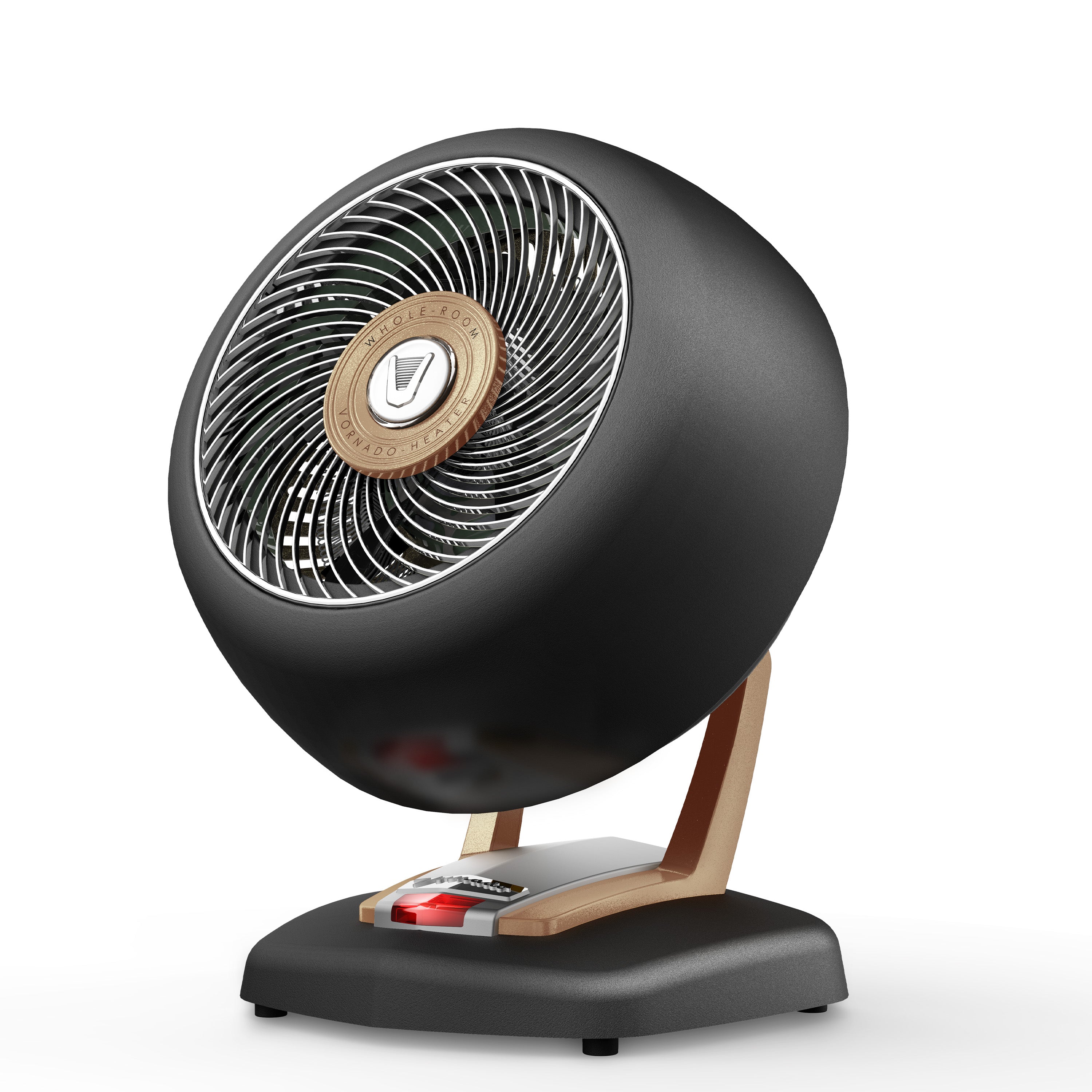
The current U.S. listing separates the finish choices into three exact SKUs. The pictured colors are cosmetic variants of the same VHEAT listing, not three different control packages:
The operating limits are part of the fit
The owner’s guide restricts the VHEAT to indoor living spaces and floor use. It must stand upright on a stable, level floor—not on a desk, shelf, bed, or other soft or elevated surface. Keep it at least three feet away on every side from furniture, bedding, curtains, outlets, and other objects that could ignite; also keep the air inlet and outlet unobstructed. It is not for bathrooms, laundry rooms, other damp areas, outdoors, or placement where it could meet water.
Vornado says to plug it directly into a properly grounded wall receptacle, not an extension cord, power strip, surge-protected unit, or GFCI outlet. It does not recommend unattended or unsupervised operation, and says to unplug the heater when it is not in use. The tip-over cutoff and blocked-airflow shutoff are helpful safeguards, but neither makes it suitable to leave on in an empty room or while sleeping. The outlet grille and pivoting head can be warm to the touch after use; the metal construction is not a cool-touch claim.
Routine care and reset
Vornado recommends weekly exterior cleaning: unplug first, vacuum dust from the front grille and rear inlets with a brush attachment, then wipe the unit with a soft, dry cloth. If the overheat cutoff interrupts operation, the guide says to switch off and unplug it, remove obstructions, let it cool for five to ten minutes, and then retry on a stable floor. Repeated shutdowns are a reason to contact the maker, not to bypass a safety feature. The manufacturer’s guide states a five-year warranty for the original consumer, subject to its terms.
Who should choose it—and who should keep looking?
Choose the VHEAT when a manually aimed head, two heat levels, a conventional adjustable thermostat, metal styling, and a five-year warranty fit the task—and when you can meet the floor, outlet, supervision, and three-foot-clearance requirements. The green, white, and Gunmetal variants do not change those operating facts.
Keep looking if you need fan-only air movement, a timed shutoff, a scheduled start, remote or app control, powered oscillation, a documented low-watt ceiling, or tabletop placement. For a fan-only mode and a user-set shutoff countdown, compare the Velocity Cube 5S; it has a different control set and still requires its own manual’s clearances. For a taller whole-room option with documented heat-level and fan modes, see the Rise 20H assessment. Neither comparison makes the VHEAT a bad heater; it clarifies that its best reason to choose it is the combination of tactile simplicity and a manually pivoting, vintage-styled body.
Key details at a glance
| US supply voltage | 120 V |
|---|---|
| Installation form | Floor-standing and movable |
| Exact manual permits bathroom use | No |
| Power-heat levels | 2 |
| Separate fan-only mode | No |
| Timer behavior | The exact guide documents no user-set auto-off or delayed-start timer and warns against an external timer designed to switch the heater on or off. |
| Can the heater start on a timer? | No |
| Fanless convection heating | No |
| Heated-air direction | focused |
| Manual vertical outlet tilt | Yes |
| Manual tilt range | 47° |
| FortPlug plug-area overheat cutoff | No |
| ALCI leakage-current plug | No |
| Powered outlet louvers | No |
Use the exact model’s instructions for operating limits, supplied equipment and version differences.
Sources for this assessment
Check whether the room and routine line up.
Check room restrictions and full wall clearances first, then compare fan-only versus fanless heat, fit, app controls and the timer behavior the exact manual describes.