
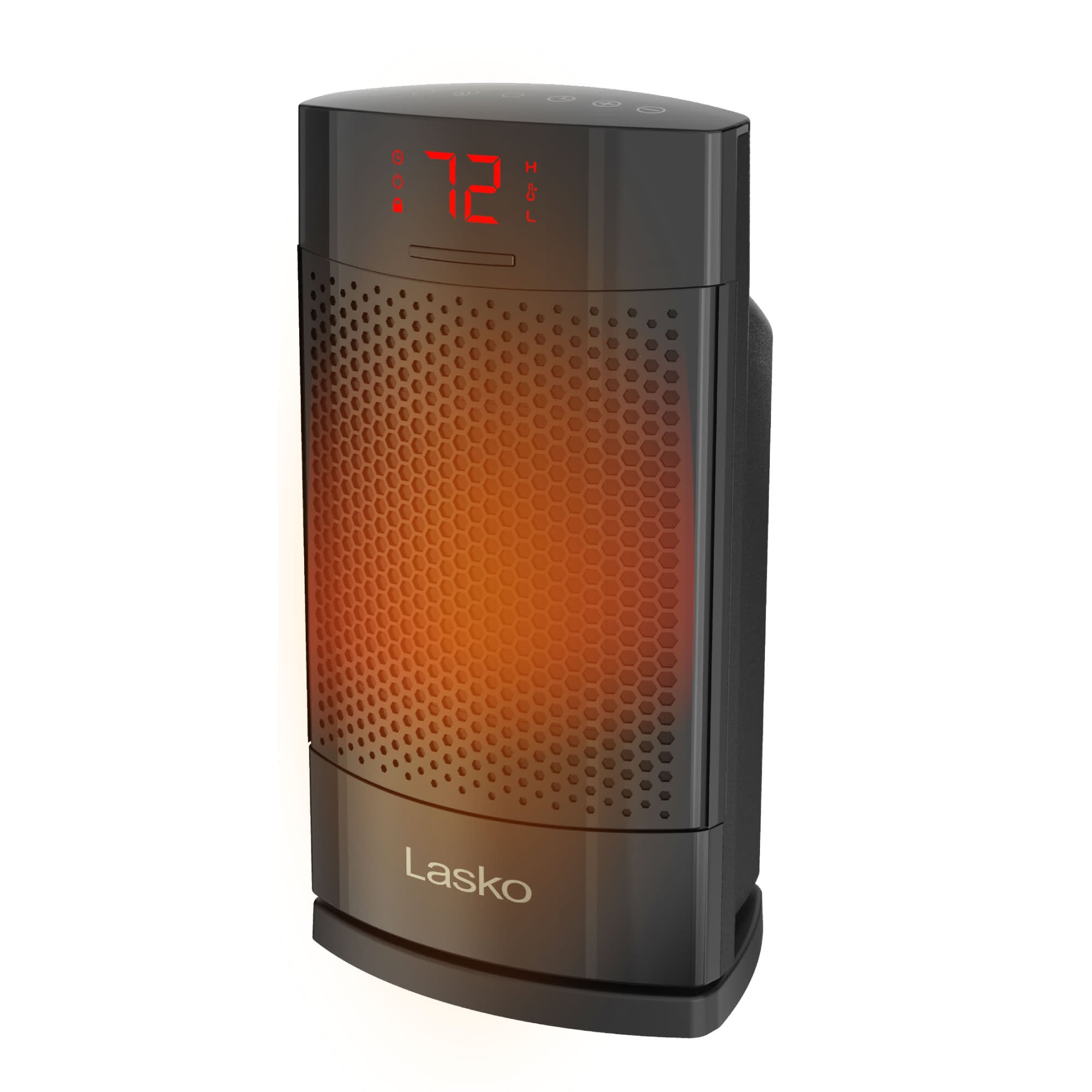
Your needs, this model
Does it fit your priorities?
Can your tabletop meet the full operating clearances rather than just fit the compact body?
The official page markets CD12650 for tabletops; its exact manual still requires a stable, level surface, 36 inches of clearance in front and 12 inches at the sides and rear from combustibles, with the intake and exhaust unobstructed.
Explore this need in the finder →Do three heat levels and adjustable thermostat control meet your comfort need without requiring an included remote?
The current page and CD12650 manual document H1/H2/H3 and an adjustable room thermostat. The page specifies no remote, so a required physical remote is not satisfied.
Explore this need in the finder →Would a documented 12-hour off countdown suffice, or do you require a later scheduled start?
The manual documents up to 12 hours of automatic shutoff, but does not describe delayed start. It also says not to leave the heater operating unattended.
Explore this need in the finder →Is the child lock enough if Power remains active?
Holding the manual’s lock control disables heater functions except Power; already active functions remain on. That is not a lock that blocks power or a childproof barrier.
Explore this need in the finder →Is a separate fan-only mode essential?
The exact manual contains a generic thermostat sentence referring to fan modes, but the product page and illustrated control instructions do not identify a fan-only selector. Treat fan-only capability as unconfirmed; an essential fan-only need is not met on known evidence.
Explore this need in the finder →The Lasko Ellipse Edge CD12650 is the single-SKU version of Lasko’s compact 12-inch tabletop ceramic heater: three heat levels, an adjustable thermostat, a 12-hour off timer, touch controls, base oscillation and a child lock. Unlike the CD12950/CD12951 Ellipse pair, the CD12650’s official page says no remote is included. Its smaller body is useful only where the full operating zone fits; the manual requires a stable, level surface and three feet of open space in front, plus one foot at the sides and rear from combustibles.
Tabletop size is not the same as a small safety footprint
Lasko lists the body at 12 inches high, 6 inches deep and 4.25 inches wide, with a built-in handle and a six-foot cord. That is easy to move between rooms, but it does not make a crowded desk or nightstand automatically suitable. The exact instructions call for a stable, flat surface and unobstructed intakes and exhaust; bedding, papers, curtains, furniture and other combustibles must remain at least 36 inches in front and 12 inches at each side and the rear. Do not put it on a bed or other soft surface. If your intended tabletop cannot maintain those clearances, choose another placement plan rather than squeezing this heater into the available gap.
The manual also makes power delivery part of the setup: connect it directly to a 120-volt wall receptacle, not an extension cord, power strip, surge protector or multi-outlet adapter, and do not share the same outlet or circuit with other devices. Lasko lists a 1,500-watt maximum and a 7.5–12.5-amp range. Check that the polarized plug fits firmly and does not become hot. This is a supplemental residential heater for a dry indoor space, not a bathroom, laundry area, damp location or outdoor unit.
Three heat stages, thermostat cycling and a countdown
The control panel selects H1 Low, H2 Medium or H3 High. The product page lists an output range of 898 to 1,500 watts, but neither the page nor the exact manual maps a particular wattage to each stage, so do not assume that H1 has a specific draw. The touch controls and LED display let you set a target room temperature and see the room reading; the manual warns that the display is not the temperature of the air leaving the heater. In automatic temperature control, the unit switches heat off at about two degrees above the selected target and resumes around one degree below. That is the maker’s described control behavior, not an independent accuracy test. The circulation fan can continue for about 15 seconds after heat stops.
The timer is an auto-off countdown up to 12 hours: half-hour increments through two hours, then one-hour increments up to twelve. It is not a delayed-start schedule. A 12-hour shutdown option can be useful when you remain present and want a defined stop time, but the manual says not to leave the heater operating unattended. Neither the timer nor the tip-over and thermal-overload protections changes that instruction. If an overheat shutoff occurs, Lasko says to unplug the heater, allow ten minutes to cool, then reconnect and follow the operating instructions.
What the child lock and oscillation actually establish
The manual confirms a base-oscillation control, while Lasko describes widespread oscillation. The documentation does not give a numeric sweep angle or name a mechanical axis, so a hard minimum such as 90 degrees or an essential left-to-right specification remains unverified. The control is useful if you want a spreading pattern, but it is not a reason to assume measured room-wide coverage. The page’s claims about faster warmth and energy efficiency are promotional; there is no independent room-heating test here.
The child lock blocks setting changes but not Power. When engaged, all functions except the power button are disabled, and functions already running remain active. It is therefore a control lock, not a childproof barrier or a way to prevent the heater from being switched off or on. The exact instructions separately list a tip-over switch, thermal-overload protection and a cool-touch exterior claim; these safeguards do not replace supervision, clearances or a sound electrical connection.
Which needs it can and cannot meet
Choose the CD12650 if a stable tabletop is your real plan, three heat stages and adjustable automatic temperature control are useful, and you do not require a remote. It also fits a need for a documented 12-hour auto-off countdown and a control lock that leaves Power available. For a floor-standing heater, an included remote, an app, a scheduled start, more than 12 hours of timed operation, or a specified numeric oscillation arc, this model does not fit the documented need. The fan-only wording in the manual is not enough to confirm a separate fan-only mode: it mentions thermostat behavior in fan modes, but its control diagram does not show a fan selector. Treat fan-only capability as unknown, not as a confirmed feature.
Compare the CD12950/CD12951 review if you want the same compact Ellipse-tabletop idea with a documented remote and separate two-speed fan-only operation; those are meaningful control differences, not color changes to CD12650. If the required clearance zone or direct wall outlet is unavailable, neither small size nor a child lock makes the setup appropriate. The CD12650’s published weight conflicts with the native product record, so weight is left out rather than guessed. Lasko backs it with a three-year limited warranty; actual price and stock can change, so check the current listing and exact model number before purchase. Before setup, use Lasko’s CD12650 product page and its New 3/26 CD12650ES manual for the complete model-specific directions.
Key details at a glance
| Maximum listed input | 1500 W |
|---|---|
| US supply voltage | 120 V |
| Published body height | 12 in |
| Published body width | 4.25 in |
| Published body depth | 6 in |
| Installation form | Tabletop or desk placement |
| Exact manual permits bathroom use | No |
| Power-heat levels | 3 |
| Timer behavior | The New 3/26 manual documents an auto-off countdown to 12 hours: 30-minute steps through 2 hours, then 1-hour increments to 12 hours. It does not document a delayed start. It warns not to leave the heater operating unattended; a timer does not override the warning. |
| Can the heater start on a timer? | No |
| Phone-app control | No |
| Fanless convection heating | No |
| Heated-air direction | |
| Manual vertical outlet tilt | No |
| Powered outlet louvers | No |
| Control lock | Yes |
Use the exact model’s instructions for operating limits, supplied equipment and version differences.
Sources for this assessment
Check whether the room and routine line up.
Check room restrictions and full wall clearances first, then compare fan-only versus fanless heat, fit, app controls and the timer behavior the exact manual describes.