
On this page
Your needs, this model
Does it fit your priorities?
Do you want heat without fan-driven airflow, or do you need a fan-only breeze?
These PSH07O2A variants are fanless oil-filled radiators. They do not provide fan-only airflow; choose a documented fan heater if moving air without heat is essential.
Explore this need in the finder →Will the listed 26.06-inch height fit below your maximum body-height limit?
Pelonis lists 26.06 inches tall. That is under 27 inches but over a strict 26-inch cap; this body dimension does not include the separate 3-foot operating clearance.
Explore this need in the finder →Can a timer start the heater later?
No later-start timer is documented in the exact U.S. manual. Its MIN-to-MAX thermostat cycles heat; it is not a countdown or scheduled start.
Explore this need in the finder →Is bathroom or near-water placement essential?
No. The exact manual says not to use this model in bathrooms or similar locations and never where it may fall into or contact water.
Explore this need in the finder →Is your maximum electrical-input limit at least 1,500 W?
The highest documented setting is 1,500 W. It meets a 1,500 W cap but not a lower cap; the 600 W position is the lowest numbered setting, not a manufacturer-named Low mode.
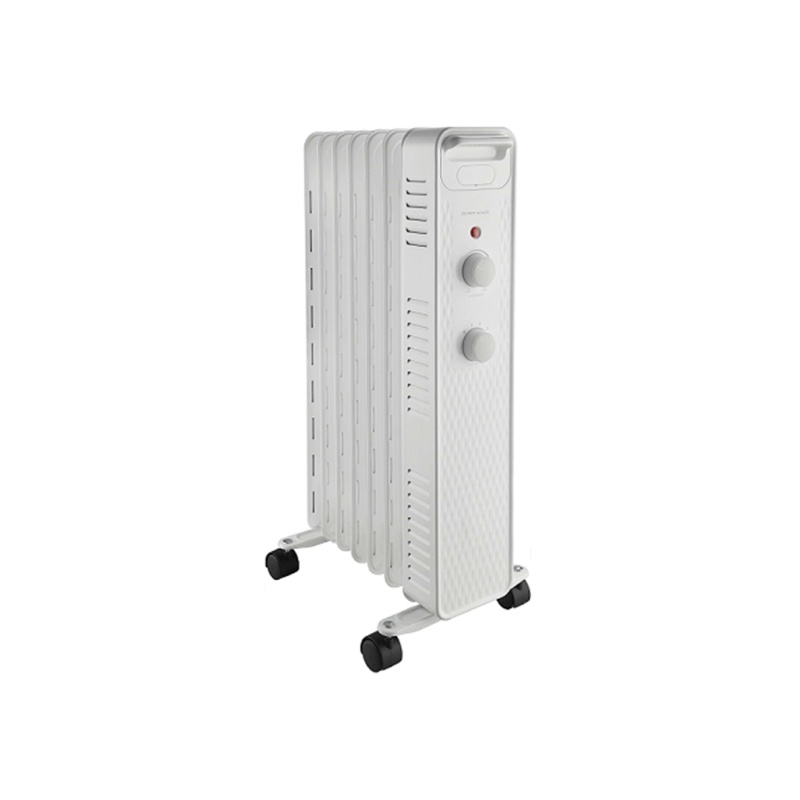
Explore this need in the finder →Pelonis lists the white PSH07O2AWW and black PSH07O2ABB as separate finish variants of the same mechanical oil-filled radiator. Its shared U.S. owner’s manual names both models, and it documents the same three wattage settings and controls. Choose between them for appearance, not for a claimed difference in heat, controls or safety instructions.
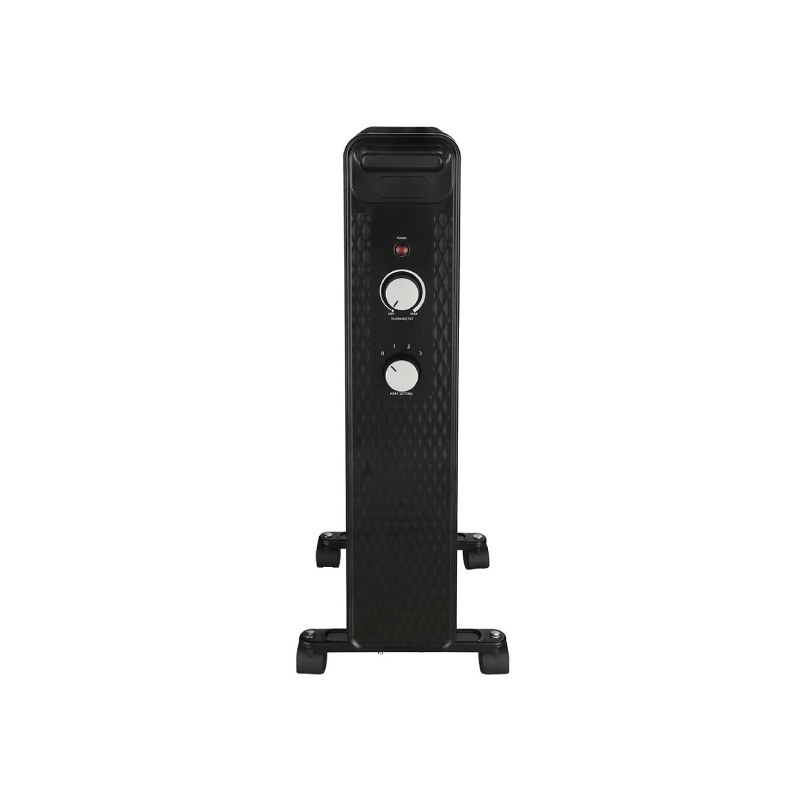
Image source and model notes
Fanless warmth, not moving air
This is a wheeled oil-filled radiator with no fan-only mode and no fan-driven heating stream. That makes its form relevant if you want a heater without forced airflow; it is the wrong answer if you need a breeze when heat is off, a directed fan stream, or a small desk heater. Pelonis describes quiet whole-room heating, but that is its claim, not a measured noise or room-performance result. We have no independent sound, warm-up, temperature-evenness, energy-cost or room-coverage measurements for this model.
The selector offers three numbered positions: 600 W, 900 W and 1,500 W. They are different electrical-input levels, not three thermostat temperatures. A separate knob moves from MIN to MAX; the manual says the thermostat switches the heater on and off as the room changes around the chosen setting. It does not publish a Fahrenheit range or a degree-by-degree increment. The manual lists 120 V, 60 Hz, a maximum continuous draw of 12.5 A and an output figure of 5,200 BTUs. Treat that last figure as a manufacturer specification, not a promise of coverage or an independent heat-output test. A lower wattage position is not proof that the heater will use a particular amount of energy over an evening; thermostat cycling, room conditions and runtime matter.
Simple knobs leave out scheduling
The manual shows a mechanical power-and-setting control and a separate thermostat. It does not document an automatic shutoff countdown, a later-start schedule, phone-app control or a remote in the package. If you want to arrive to a room already warming, do not mistake thermostat cycling for a timer: the thermostat reacts to room temperature while the heater is operating; it does not make a schedule. The DREO Oil-filled Radiator 310 is a more suitable comparison if a documented start/stop countdown and remote control matter (see its separate review). It remains a fanless floor radiator, but its control arrangement is different.
Likewise, this Pelonis will not meet an essential fan-only requirement. A fan heater with a separately documented fan-only setting is a better fit for air movement without heating. A wall-mounted heater is a different installation choice: neither PSH07O2A variant is described for wall mounting. These distinctions matter more than the shared phrase “space heater” on a shopping page.
Measure the setup, including clearance
Pelonis publishes a length of 15.4 inches, width of 6.38 inches and height of 26.06 inches. That height fits beneath a 27-inch body limit but not a strict 26-inch limit. Do not use that measurement as a clearance allowance. The manual calls for at least three feet from any wall and any other objects, so the space around the radiator may be the harder fit question than its narrow listed width.
Do not rely on either weight shown in the two official variant pages. The white page lists 8.28 pounds and the black page lists 20 pounds despite the same published dimensions and shared manual; the pages also disagree about whether the control is “Electrical” or mechanical. The exact shared manual and both page titles support mechanical knob control, but the weight conflict is unresolved. We leave weight unknown rather than choosing whichever number looks plausible. If lifting weight is essential, verify the exact package with Pelonis or the seller before buying.
The setup rules are part of the fit
Before use, install both wheel assemblies as the manual illustrates; it warns not to operate without them. Use the heater upright, wheels down and controls on top, on a firm, level, unobstructed floor. Plug it into a grounded 120 V outlet. The manual prohibits an extension cord or relocatable power tap such as a power strip, and it says not to leave the heater on unattended. It is not for outdoor use, bathrooms, laundry areas or similar locations, and must never be placed where it could fall into a bathtub or contact water. A tip-over switch and overheat protection are documented, but neither changes those placement or supervision limits.
Plan for the warm surfaces and the manual’s full three-foot spacing. Keep combustible materials away from the front, sides and rear; do not cover the radiator or block openings. The manual’s first-use, cleaning and storage instructions should be followed rather than improvised: unplug and let it cool before wiping exterior surfaces with a dry cloth, and do not immerse it or use cleaning agents. The cord-wrap and carry handles help with storage and room-to-room movement, but disconnect and cool the unit before moving it.
Who should shortlist it?
The PSH07O2A family makes sense when you want a floor-standing, fanless radiator with three directly chosen power levels and a thermostat knob, have a dry indoor location with ample clearance, and do not require scheduled operation. It is a poor match for a tight walkway, a room where three feet from walls and objects cannot be maintained, bathroom or outdoor use, unattended heating, a strict sub-26.06-inch body-height limit, or a need for known light weight. If the key requirement is a timed start, compare a model whose exact manual documents that function; if it is air circulation, compare a fan heater. The two Pelonis color choices do not change these functional tradeoffs.
Pelonis PSH07O2AWW product page · Pelonis PSH07O2ABB product page · Shared PSH07O2ABB/PSH07O2AWW U.S. owner’s manual · DREO Oil-filled Radiator 310 review
Key details at a glance
| Maximum listed input | 1500 W |
|---|---|
| US supply voltage | 120 V |
| Published body height | 26.06 in |
| Published body width | 6.38 in |
| Published body depth | 15.4 in |
| Installation form | Floor-standing and movable |
More specifications and setup details
| Exact manual permits bathroom use | No |
|---|---|
| Power-heat levels | 3 |
| Listed wattage values | 600 / 900 / 1500 W |
| Separate fan-only mode | No |
| Documented fan-only speeds | 0 |
| Maximum documented horizontal sweep | 0° |
| Timer behavior | The exact PSH07O2ABB/PSH07O2AWW U.S. manual documents no countdown or scheduled-start timer. The rotary thermostat cycles heat around its selected MIN-to-MAX setting; that is not a timer. |
| Can the heater start on a timer? | No |
| Minimum wall clearance at each side | 36 in |
| Fanless convection heating | Yes |
| Heated-air direction | |
| Manual vertical outlet tilt | No |
| Heating element description | oil-filled radiator with fanless natural convection and radiant warmth |
Use the exact model’s instructions for operating limits, supplied equipment and version differences.
Sources for this assessment
Check whether the room and routine line up.
Check room restrictions and full wall clearances first, then compare fan-only versus fanless heat, fit, app controls and the timer behavior the exact manual describes.