
Your needs, this model
Does it fit your priorities?
Can you plan the 240-volt hardwired in-wall installation?
The exact manual identifies 240 volts and hardwired connection, with 1,500- and 3,000-watt settings.
Explore this need in the finder →Would Wi-Fi control and a lower 1,500-watt setting still be useful?
The page lists selectable 1,500- or 3,000-watt output and Wi-Fi scheduling; the lower output does not change the model’s 240-volt supply requirement.
Explore this need in the finder →Do you want a no-heat fan mode as well?
The manual shows a fan-only/heat-mode control in addition to the two heat settings.
Explore this need in the finder →The HS-3000-WALL-R is a fixed 240-volt in-wall heater with Wi-Fi schedules and two high-output settings, 1,500 and 3,000 watts. It suits a room with a suitable wall opening and a planned hardwired circuit; it does not suit a shopper who needs an ordinary plug-in, portable or low-power heater.
Why it is not the 1,500-watt in-wall model
The Heat Storm collection’s exact U.S. row, product 7546168672317, uses SKU HS-3000-WALL-R. The linked manual cover names the same model. That identity matters: the related A-1500-WALL-R is a separate 120-volt, 1,500-watt configuration with a different body and connection plan. The 3000-WALL-R has selectable 1,500- or 3,000-watt output, and its manual specifies 240 volts and hardwired installation. Do not select it on the assumption that the lower mode lets it work from a common 120-volt outlet. A lower wattage setting does not change the product’s required supply or installation.
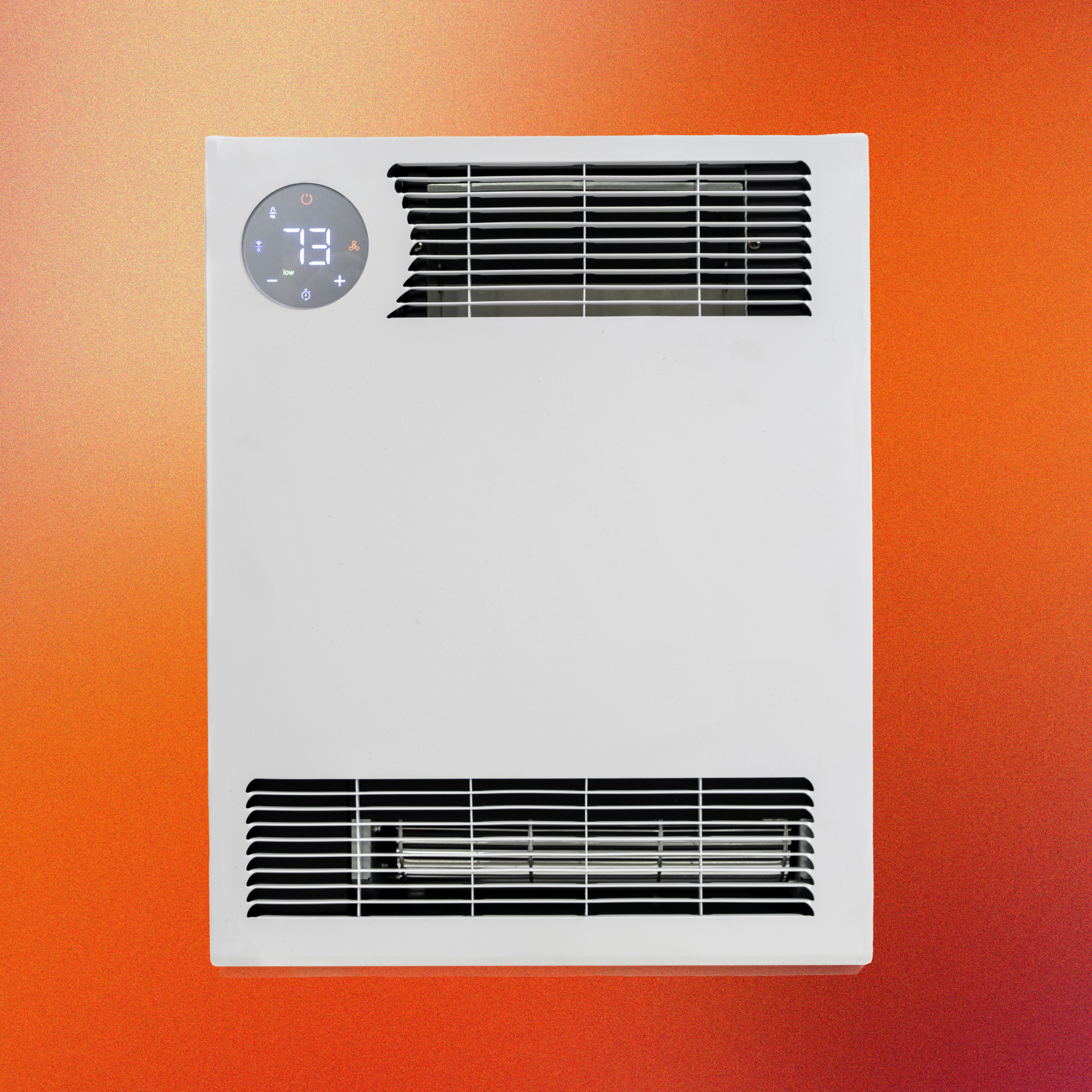
Heat Storm lists a wall can in the box, Wi-Fi control and heating schedules, an adjustable digital thermostat, touchscreen, LED-brightness control, child lock and overheat protection. The product page gives dimensions of 15.51 by 4.92 by 19.88 inches, weight 16.97 pounds, a sound range of 42–47 dB and 10,400 BTU. Its room figures should be treated as maker guidance rather than independent performance: the page describes a broad range, while room geometry and insulation determine real heating needs. The manual calls the unit forced-air and in-wall; it also includes a fan-only control, so a no-heat airflow need is supported separately from the heating modes.
Electrical and wall planning comes first
Unlike a small plug-in heater, this model needs a 240-volt hardwired plan. Have an electrician confirm circuit requirements and the installation against the received unit’s nameplate and current manual before purchase. A 3,000-watt heater is a substantial fixed appliance; Wi-Fi does not make its wiring, clearance or load planning optional. Check that the wall opening, framing, can and service access conform to the manual rather than assuming the image or page title describes a simple surface bracket.
The manufacturer instructs the user to keep at least three feet clear in front of the heater and excludes wet or moist locations, outdoor use and extension wiring. Its hot outlet should not face curtains, towels, furniture or anything combustible. The manual’s own hot-surface language is more useful than any generalized claims about safer touch or smart control. If the wall location is near water or cannot preserve the front clearance, choose another location or another heater category. The maker’s app-schedule feature should not be read as approval for unattended operation.
Who should consider this configuration
The HS-3000-WALL-R is relevant when you want a recessed fixed heater, have 240-volt wiring available or can have it installed, and need a higher ceiling than the 1,500-watt in-wall models offer. The 1,500-watt setting can provide a lower output while retaining the same hardwired 240-volt form. If you need 120-volt service, the A-1500-WALL-R or a surface wall unit is a more appropriate comparison. If you need a high-mounted shop heater with wall-or-ceiling placement, compare the A-6000-GC, understanding that its larger output and installation requirements are different again.
Do not treat the wall can as a universal retrofit kit or rely on square-foot advertising to size a cold, leaky room. The page capture showed sold-out language, so availability needs a current check; the identity and manual bridge remain documented regardless. The gallery image is the maker’s first-page product image, and the manufacturer does not disclose whether it is photography or rendering. Consult the HS-3000-WALL-R listing and current manual, then get the electrical and opening plan checked before ordering.
Key details at a glance
| Maximum listed input | 3000 W |
|---|---|
| US supply voltage | 240 V |
| Published body height | 19.88 in |
| Published body width | 15.51 in |
| Published body depth | 4.92 in |
| Published body weight | 16.97 lb |
| Installation form | Recessed or in-wall installation |
| Exact manual permits bathroom use | No |
| Power-heat levels | 2 |
| Listed wattage values | 1500 / 3000 W |
| Separate fan-only mode | Yes |
| Phone-app control | Yes |
| Fanless convection heating | No |
| Control lock | Yes |
| Documented electrical connection | Hardwired connection |
| Heating element description | Forced-air electric |
Use the exact model’s instructions for operating limits, supplied equipment and version differences.
Sources for this assessment
- Heat Storm 3,000-Watt In-Wall Wi-Fi Heater official product page
- Heat Storm U.S. Indoor Heaters native collection page 1
- Heat Storm official manual directory
- Heat Storm In-Wall Electric 3000 Watt Heater with Wi-Fi retail and manual SKU HS-3000-WALL-R official user manual
- Heat Storm 3,000-Watt In-Wall Wi-Fi Heater manufacturer product-page image

Check whether the room and routine line up.
Check room restrictions and full wall clearances first, then compare fan-only versus fanless heat, fit, app controls and the timer behavior the exact manual describes.