
On this page
Your needs, this model
Does it fit your priorities?
Can the DR-298 heat without fan-driven airflow?
Yes. The exact manual identifies a carbon infrared element; the heater is fanless.
Explore this need in the finder →Is dry outdoor floor operation possible?
Yes, under the exact manual’s outdoor instructions and a GFCI-protected supply. This is not bathroom or near-water approval.
Explore this need in the finder →May it be placed near a sink, tub or shower?
No. The manual prohibits bathroom/near-water use, regardless of its separate outdoor-with-GFCI direction.
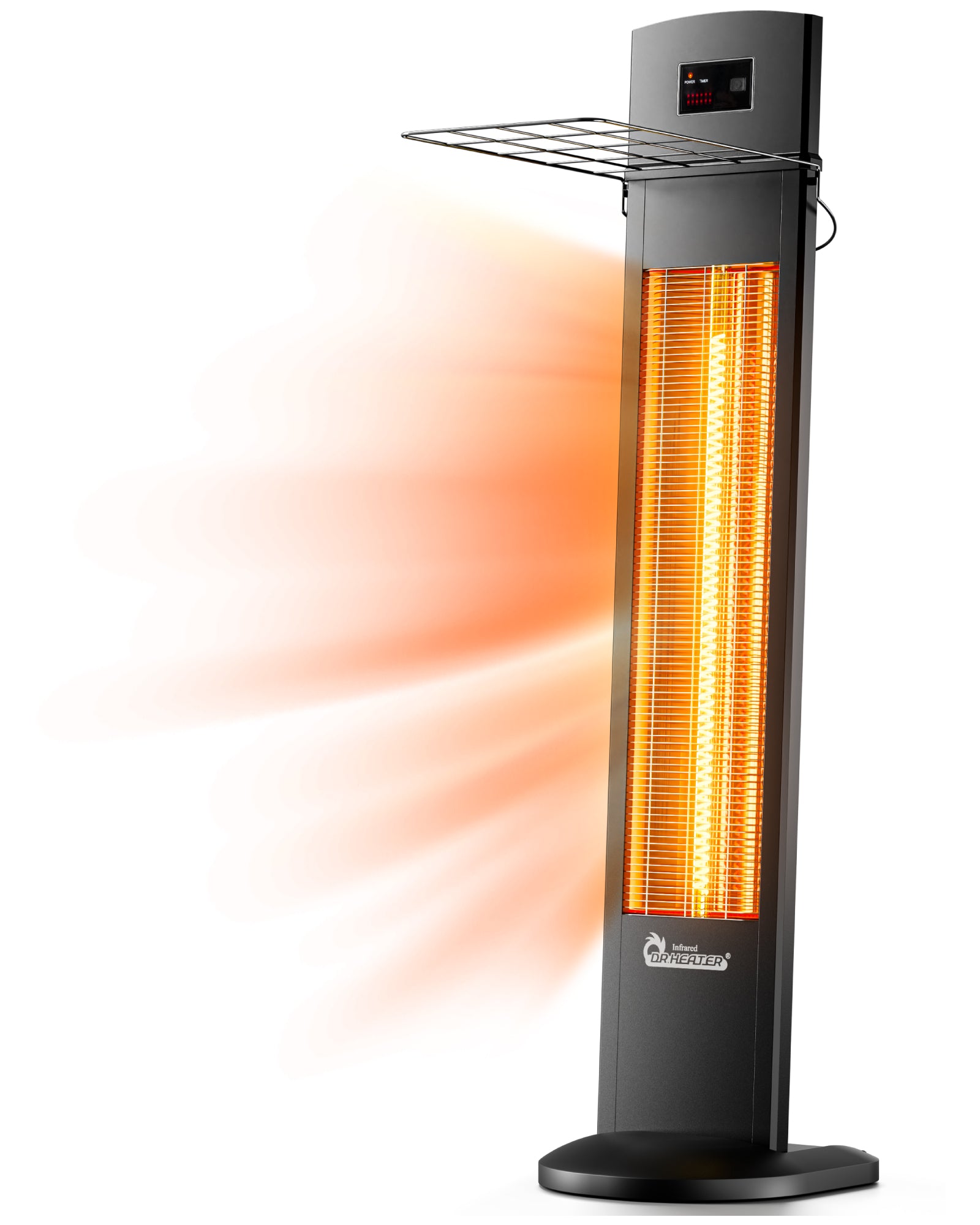
Explore this need in the finder →The Dr. Infrared Heater DR-298 is unusually flexible for a 1,500-watt carbon infrared heater: its manual covers a portable floor base as well as separate wall- and ceiling-mounted arrangements. It is fanless radiant heat, not a compact forced-air room heater. That distinction matters if you need warm air circulation, fan-only operation or a conventional 120-volt plug-in unit that can be moved without setup.
Three output levels and a short manual timer
The exact DR-298 manual lists 900, 1,200 and 1,500 watts at 120 volts and 60 hertz. It describes a carbon infrared element and a reflector that directs radiant output. The supplied remote adjusts the three heat levels and timer; the manufacturer’s exact manual limits the countdown to six hours. The current product page advertises a longer timer, but for operating expectations this review follows the model-specific manual. No delayed start is documented.
The manual’s floor arrangement uses a baseplate and gives the heater a slight three-degree projection tilt. Wall or ceiling installation uses a different bracket arrangement and needs secure mounting. For wall installation, the manual requires at least 19.7 inches from either a vertical or horizontal surface and recommends a 30-to-45-degree mounting angle for coverage. A ceiling installation has a separate minimum mounting height of 94.5 inches. These are installation constraints, not the heater’s body dimensions. The manual also says to maintain three feet from combustible materials around the portable heater.
Indoor and outdoor claims require care
The manufacturer’s manual describes both indoor and outdoor use, but explicitly says outdoor use must be on a GFCI outlet. The document does not give the heater an IP wet-location rating or permission for exposure to rain, standing water or a sink, tub or shower. It separately warns against bathroom/laundry use and any placement where the heater could fall into water. So outdoor use should mean only an arrangement the exact manual permits with its GFCI condition; it is not a license to operate it in wet weather or near water.
The manual also says never to leave the heater operating unattended. This is particularly important because mounting can disable the tip-over function: the wall/ceiling instructions show a cover or stopper that deactivates that feature. The portable floor configuration and fixed mounting configurations therefore should not be collapsed into one blanket “safety feature” claim. Follow the instructions for the actual mount and keep the heater under supervision.
Who benefits from the extra mounting choices
DR-298 may fit a patio-adjacent or work area where radiant warmth should be aimed at people, provided the installation and electrical instructions are followed. It is a better candidate than a standard ceramic fan heater when no fan-driven air is desired. It is a worse fit if you need thermostat cycling, exact delayed scheduling, indoor use with a remote on a wheeled cabinet, or a verified water-resistant appliance. The three heat settings are output choices; they are not evidence of a particular room size or energy saving.
Compare the DR-123 for a rolling indoor cabinet with a digital thermostat, but note its fan-forced design and monthly filter routine. Compare the DR-218 for a greenhouse/workshop heater with fan-only mode and a 120- or 240-volt variant, but its exact manual prohibits outdoor operation. DR-298 is the more flexible mount/outdoor product, yet its GFCI and clearance requirements create their own setup work.
Choose DR-298 only after deciding where it will be installed: floor, wall or ceiling. Measure the actual clearances, verify a grounded 120-volt outlet, add GFCI protection for manual-approved outdoor use and keep the unit away from water. The correct mounting plan is part of the product choice, not an afterthought.
Sources: Dr. Infrared Heater DR-298 product page; DR-298 instruction manual.
Key details at a glance
| Maximum listed input | 1500 W |
|---|---|
| US supply voltage | 120 V |
| Installation form | Floor-standing and movable |
| Exact manual permits bathroom use | No |
| Power-heat levels | 3 |
| Listed wattage values | 900 / 1200 / 1500 W |
More specifications and setup details
| Separate fan-only mode | No |
|---|---|
| Timer behavior | Exact manual: 0–6 h auto-off timer; no delayed start documented. |
| Can the heater start on a timer? | No |
| Fanless convection heating | Yes |
| Heated-air direction | focused |
| Heating element description | Carbon infrared radiant element; fanless heating |
Use the exact model’s instructions for operating limits, supplied equipment and version differences.
Sources for this assessment
Check whether the room and routine line up.
Check room restrictions and full wall clearances first, then compare fan-only versus fanless heat, fit, app controls and the timer behavior the exact manual describes.