
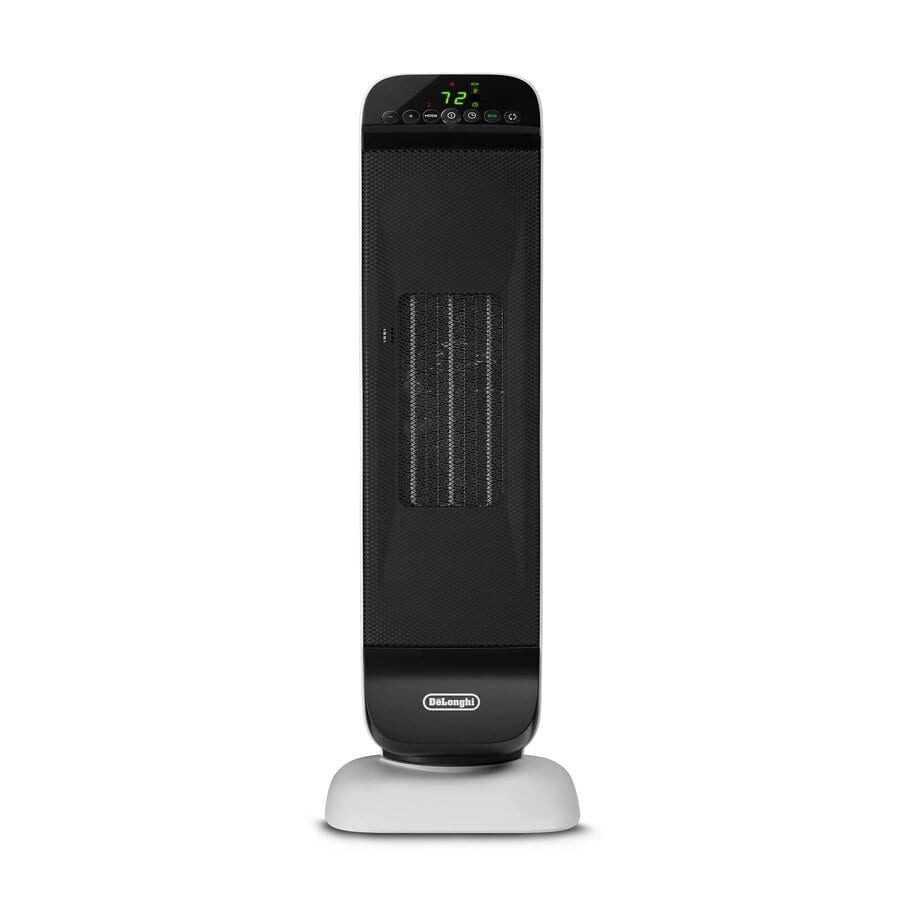
Your needs, this model
Does it fit your priorities?
Do you want a low/high ceramic fan heater with fan-only operation, or heat without forced airflow?
The exact product page lists two ceramic fan-heating settings and separate fan-only summer ventilation. It does not offer fanless heat.
Explore this need in the finder →Is a physical remote enough, or do you require connected app control?
The exact U.S. page lists a full-function remote; app control is not documented and cannot satisfy an essential app requirement.
Explore this need in the finder →Can you accept an oscillating base whose swing axis is not specified?
The manufacturer lists an oscillating base, but no axis or sweep angle. A required horizontal-swing condition remains unverified and must not match.
Explore this need in the finder →Does your use depend on verified bathroom or outdoor approval and exact clearance rules?
The matching exact-model support center currently provides no manual despite the product page directing users there. Wet-area approval and clearance rules are therefore unknown; do not use it for an essential bathroom/outdoor/clearance need unless the correct instructions are obtained.
Explore this need in the finder →The De’Longhi HFXR28S15W is a currently listed U.S. ceramic tower heater, model-specific to SKU 0114662021. The manufacturer describes a 1,500-watt fan heater with a 750-watt lower heat setting, two power settings, an electronic thermostat, an included remote, fan-only ventilation, an ECO function, a 24-hour timer, oscillating base, anti-freeze protection and tip-over shutoff. Its product page also lists 120 volts/60 Hz, dimensions of 7.72 x 6.1 x 23.25 inches (axes not labeled), and 4.04 lb. The combination is compelling if you want a lightweight tower with simple room-side controls; a couple of important operating details, however, are not yet documented in the exact support material available.
What the two heat settings actually mean
The U.S. specification gives 750 watts minimum and 1,500 watts maximum, with two power settings. That lower stage is a little higher than the HFX66V15C’s listed 700-watt minimum, while the TCH7915ER lists a 900-watt minimum. All three are fan-forced ceramic heaters, but that distinction changes how useful a low setting may feel in a small, already-warm room. These are labeled electrical inputs, not independent measurements of warmth, runtime, or cost. The heater still blows warm air out the front; if you specifically want heat without forced airflow, compare an oil-filled radiator or fanless convection panel rather than choosing from tower styling alone.
De’Longhi’s page says the ECO function automatically adjusts heat and power. It does not promise a particular bill reduction, and its public specifications do not explain the switching schedule or temperature range. The page lists a digital room thermostat, but without the exact instructions I cannot confirm its setpoint steps or calibration. Treat the display as a control, not as a precision thermometer.
Noise, airflow and the controls
The brand advertises a “silent function” and says noise is reduced by 20 percent at power level one compared with maximum power. That is a manufacturer comparison, not a published decibel level or an independently measured noise test. A lower fan-heater setting may suit someone looking for a gentler background setting, but anyone buying primarily for sleep or a measured sound limit should look for an independently verified sound result—none is supplied here.
The product page confirms an oscillating base, but it does not state the sweep axis or angle. I would not promise horizontal, vertical, or 3-D coverage on that basis. The included remote and fan-only mode are easier to assess: the page lists a full-function remote, and its summer-ventilation feature runs the fan without adding heat. Fan-only operation moves air; it is not air conditioning and will not lower room temperature by itself.
The page advertises a 24-hour timer, but the exact-model support center currently says there are no manuals available yet. The product page directs users to its support section for a manual, so the two pages do not provide a usable instruction document today. The timer’s exact increments, whether it supports delayed start as well as shutoff, and the recommended safety clearances therefore remain unverified. Do not treat an advertised timer as evidence that remote or unattended operation is safe. Obtain the HFXR28S15W instructions before relying on a schedule or placing it around furnishings.
Safety and room fit: a real documentation limit
The manufacturer lists a safety thermostat, thermal shut-off with two-stage overheat protection, tip-over switch and double insulation. Those are useful design features, not a replacement for clearances or suitable electrical use. The exact support page does not currently expose the HFXR28S15W manual, and I will not transfer bathroom restrictions, outlet requirements, spacing numbers, minimum room area, or unattended-use guidance from another De’Longhi tower. This listing is a portable household heater for small spaces and individual comfort; De’Longhi also says it is suitable only for well-insulated spaces or occasional use. The page offers no measured room-coverage result.
That missing manual is a practical drawback, not evidence that the exact product identity is uncertain: the current U.S. category card, SKU-specific product page, and matching image all identify HFXR28S15W. It does mean the model cannot satisfy an essential questionnaire condition for bathroom permission, a particular clearance, timer behavior, or a specified room-area rule. Keep it on a general indoor shortlist only if you are willing to locate the exact instructions before operation; if you need those details settled before purchase, choose a model whose exact manual is available.
Who should shortlist it?
Consider the HFXR28S15W when you want two documented heat stages, a lower 750-watt input, fan-only air circulation, an included remote, anti-freeze function and a compact listed weight. It is more feature-rich than the mechanical HFX30 Capsule, but it is not a fanless heater and the page does not document app control. The HFX66V15C has a slightly lower listed minimum and an exact linked manual with specific placement rules; the HFXR has a lower listed weight and a manufacturer-claimed silent function, but less usable operating documentation. The TCH7915ER is another fan-forced tower with documented low/high heat and timer behavior in its linked manual. Compare the exact SKU and evidence you need, not just a tower silhouette or similar feature names.
De’Longhi HFXR28S15W product page · Exact U.S. HFXR28S15W support page
Key details at a glance
| Maximum listed input | 1500 W |
|---|---|
| US supply voltage | 120 V |
| Published body weight | 4.04 lb |
| Power-heat levels | 2 |
| Listed wattage values | 750 / 1500 W |
| Separate fan-only mode | Yes |
| Timer behavior | Manufacturer product page describes a 24-hour timer, but exact support page currently provides no manual; timer intervals, auto-off behavior and delayed-start capability are not confirmed. |
| Fanless convection heating | No |
| Heating element description | ceramic fan-forced heater |
Use the exact model’s instructions for operating limits, supplied equipment and version differences.
Sources for this assessment
Check whether the room and routine line up.
Check room restrictions and full wall clearances first, then compare fan-only versus fanless heat, fit, app controls and the timer behavior the exact manual describes.