
On this page
Your needs, this model
Does it fit your priorities?
Is a manufacturer-listed physical remote and digital display useful?
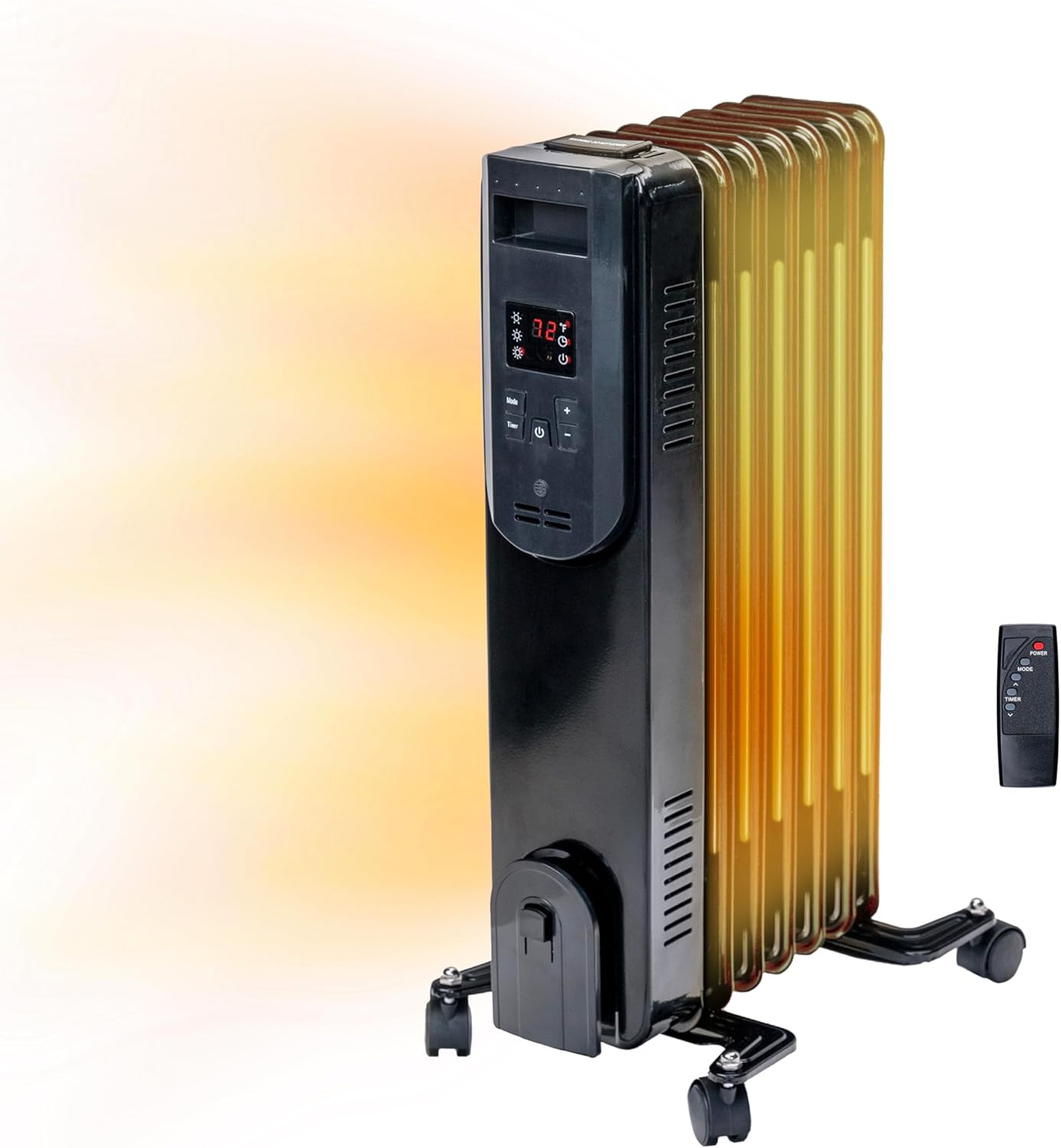
The exact manufacturer page lists an included remote and a digital thermostat display. This can suit a shopper who values seated controls, but it does not mean app control is available.
Explore this need in the finder →Do you need a known voltage and circuit before selecting a portable heater?
The exact CZ12816 page does not publish its voltage or circuit requirement and its exact manual was not found in the indexed manual file. A 120 V or other essential supply answer must not be treated as confirmed.
Explore this need in the finder →Must the exact manual confirm a timer’s shutoff function?
The page names a 12-hour timer but does not say whether that is a countdown shutoff, scheduled start, or both. An essential verified countdown requirement is unresolved and cannot pass on the listing alone.
Explore this need in the finder →Can you accept the listed 1,500-W maximum without a model-confirmed heat-stage table?
The exact page lists 1,500 W but does not name Low/Medium/High watts; because the exact manual bridge remains open, consider it only if a named stage or low-stage draw is not essential.
Explore this need in the finder →The Comfort Zone CZ12816 is the convenience-first option among these oil-filled radiators: its U.S. product page lists a digital thermostat with a room-temperature display, included remote, 12-hour timer, casters and 1,500-watt output. That mix can suit someone who values read-from-a-chair controls more than named low-wattage stages. The limitation is documentation: the checked manufacturer manual index does not list CZ12816, and the product page does not establish its voltage, exact clearances or the timer’s start/stop behavior. Treat those as open details, not as interchangeable with the CZ8008N manual.
Remote control is the clear practical difference
Comfort Zone describes a digital thermostat that displays the current temperature, a physical remote, swivel wheels and a 12-hour timer. The page says the model has 1,500 watts of heating power and calls the timer useful for a desired heating schedule. Those are helpful conveniences if you want to change settings without bending to the control panel or to wheel the unit between indoor spaces. The page does not identify a set of Low/Medium/High wattages, a numeric thermostat range or whether the timer is a countdown shutoff, delayed start, or both. I would not infer any of those specifics from an image of the control buttons.
The product page also advertises “up to 1,200 sq. ft.” That is the manufacturer’s published coverage claim, not a measured result or a guarantee for a particular room; insulation, outdoor temperature, ceiling height and heat loss all matter. The verified output ceiling is 1,500 watts, so this is not a way around the usual electrical and room-fit constraints of a portable heater. The page calls it oil-filled and describes a sealed design that needs no refilling. Its casters show a movable floor form, but they do not tell you that it is safe to move while hot or suitable for every floor surface.
What remains unknown matters to the buying decision
The exact Comfort Zone product page identifies CZ12816 and publishes its feature list, but the current owner-manual index contains no CZ12816 entry. The index itself says it is still being expanded, so absence from that list is not proof that a manual does not exist. Until the exact instructions are available, I cannot verify a voltage or circuit rating, minimum clearances, bathroom or near-water rules, supervision directions, tip-over behavior, or the timer’s precise operation. The product page claims automatic shutoff and ETL listing, but it does not explain what triggers that shutoff; that must not be turned into a claim of tip-over protection or permission for unattended use.
This is a meaningful difference from the CZ7007J and CZ8008N, whose model-specific instructions provide named heat stages, electrical requirements, clearance and supervision warnings. If you need a hard maximum on Low wattage or a confirmed 120-volt circuit, the CZ12816 should not pass that essential filter while its exact manual details remain unknown. A listing photograph or the product’s U.S. storefront does not establish the electrical label.
Choose it only when the convenience features are valuable
For a documented physical remote, use the Finder’s remote requirement: the manufacturer lists one for this exact model. A remote is not app control. A 12-hour timer is also documented, but because the page does not explain whether it starts or stops the unit, do not choose this heater for a specific countdown or scheduled-start requirement until the manual confirms it. A required low heat stage, known circuit voltage, numeric clearance, bathroom permission, near-water use, outdoor placement or unattended operation should remain unconfirmed rather than assumed.
If the remote and displayed thermostat are the main conveniences you want, the CZ12816 is worth comparing with an exact manual in hand. If you prefer a more completely specified analog setup, the CZ8008N’s 600/900/1,500-watt stages and 120 V, 15-amp-or-larger circuit instruction are better documented; the CZ7007J reaches a lower 500-watt Low but peaks at 1,200 watts. The CZ12816 product page’s current API record and rendered page also disagree about availability, so use stock information only as a dated snapshot. Review the manufacturer’s CZ12816 page and request its exact operating instructions before committing to a clearance-sensitive or circuit-specific plan.
Key details at a glance
| Maximum listed input | 1500 W |
|---|---|
| Installation form | Floor-standing and movable |
| Timer behavior | The manufacturer page says 12-hour timer but does not identify whether this is a countdown shutoff, delayed start, or both; no exact manual was found in the saved owner-manual index. |
| Heated-air direction |
Use the exact model’s instructions for operating limits, supplied equipment and version differences.
Sources for this assessment

Check whether the room and routine line up.
Check room restrictions and full wall clearances first, then compare fan-only versus fanless heat, fit, app controls and the timer behavior the exact manual describes.